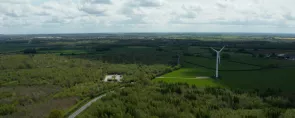
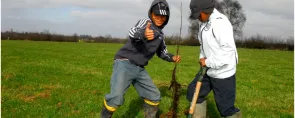
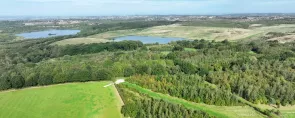
Since planting in the National Forest began more than thirty years ago, woodland cover across the area has grown from around 6% to 25%. More than 9.85 million trees have been planted so far, with the ten-millionth tree due to mark a significant milestone for the project. Much of this growth has come from planting native broadleaf species such as English oak (Quercus robur), silver birch (Betula pendula), field maple (Acer campestre), rowan (Sorbus aucuparia) and hazel (Corylus avellana), which are well suited to the landscape and form the backbone of the Forest’s rich and diverse habitats.
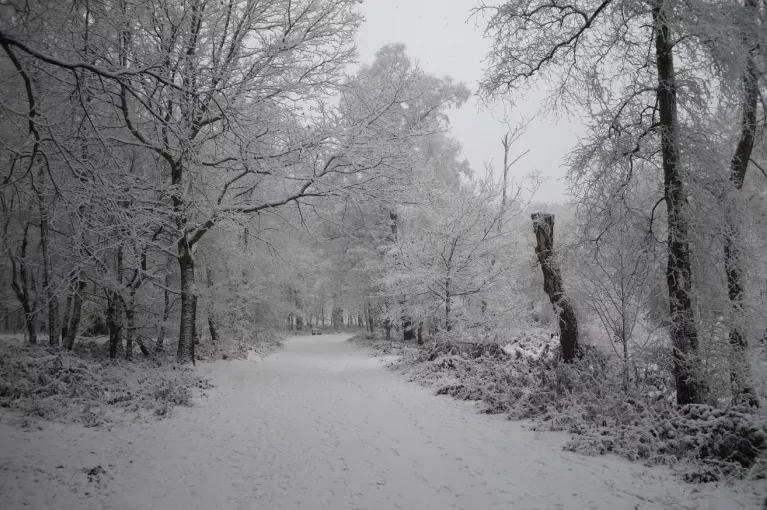
As autumn gives way to winter, the trees begin an extraordinary transformation. In response to shorter days and colder temperatures, they shed their leaves in a process known as abscission. Before the leaves fall, the trees carefully withdraw valuable nutrients such as nitrogen and phosphorus, storing them safely in their roots, trunks, and branches for use when growth resumes in spring.
Once bare, the trees enter dormancy. Growth slows to a near halt, and metabolic activity drops to a fraction of what it is in summer. The buds that were formed during the previous growing season remain tightly closed, protected by tough outer scales that keep frost and dehydration at bay.
Beneath their bark, trees have remarkable adaptations for surviving winter. Many broadleaf trees accumulate sugars and specific proteins in their cells, which help prevent ice formation and protect the living tissues inside from frost damage. The bark provides insulation, buffering these tissues from sudden temperature changes and extreme cold. Some trees, such as beech and young oak, may even hold onto a few of their dry, brown leaves through winter, a feature known as marcescence. This may help protect young buds from frost or grazing animals until spring returns.
While the Forest above ground seems silent, there is still life below the surface. The roots of these trees remain active, drawing in small amounts of water and nutrients whenever the soil is warm enough to allow absorption. They also continue to respire slowly, using stored energy to keep essential functions running through the coldest months.
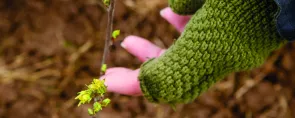
As winter gradually releases its grip and daylight increases, subtle changes begin within the buds. During winter, buds are in a state called endodormancy, meaning they will not grow even if the weather warms. Trees need a period of cold exposure, often measured as a certain number of cold days, to break this dormancy. Once the chilling requirement has been met, chemical signals inside the tree trigger growth. These hormonal shifts ensure that new leaves and flowers emerge only when the risk of frost has passed, protecting the delicate tissues and helping the tree thrive in spring.
The resilience of these trees is vital to the wider health of the Forest. Together they provide a living, connected landscape that supports wildlife, stores carbon, and offers places for people to walk, reflect, and reconnect with nature all year round. While the Forest may appear asleep, it is far from lifeless, with the trees quietly conserving their strength and waiting for the first warmth of spring to wake them once more.
If you’re feeling inspired, and want to help to grow the Forest an help towards our next milestone, then find out how you can support us.