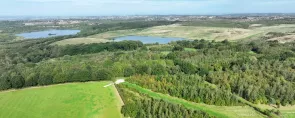
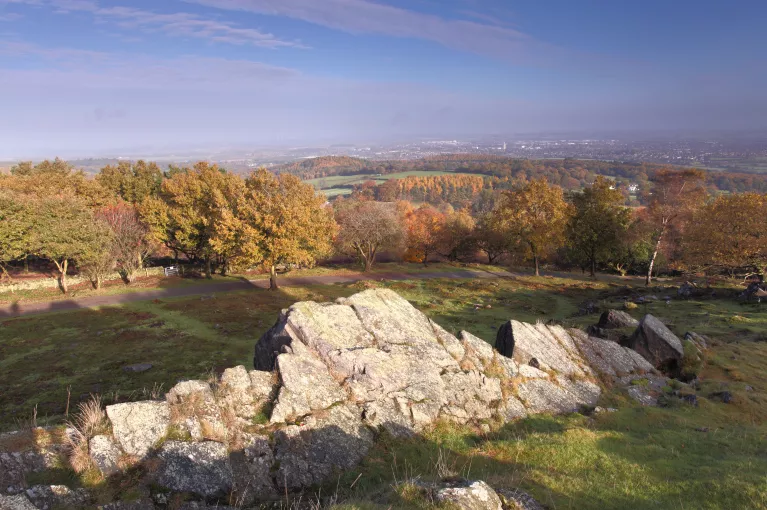
Charnwood Forest lies partly within the National Forest, and our organisation has been a strong supporter of the Geopark project from its beginnings. We are proud to work alongside the Geopark and support their efforts to celebrate and conserve Charnwood Forest, which so closely aligns with our mission to conserve heritage, connect communities and inspire people to explore the Forest.
Charnwood Forest Geopark has been supported over the past four years through a National Lottery Heritage Fund backed scheme, hosted by the National Forest. The Geopark team have the support of 17 partner organisations, to deliver conservation projects, schools’ outreach, arts programmes, volunteering opportunities and new interpretation, helping more people discover what makes Charnwood Forest so special. The close working between the Geopark and the broader National Forest team has enabled many new and interesting activities – supporting both Forests to get the most out of the public funding they receive.
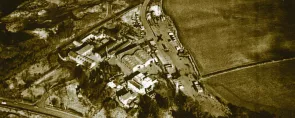
Visitors may know Bradgate Park and Beacon Hill, but the Geopark also shines a light on hidden gems such as Morley Quarry and Markfield’s Hill Hole. Charnwood Forest’s most extraordinary natural story is that of its 560-million-year-old fossils that tell the story of the rise of the first animals on planet Earth.
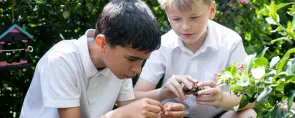
Since the discovery of the fossil Charnia by two schoolchildren in the 1950s, researchers from across the globe have looked to Charnwood Forest to understand how animal life began. Today, the Geopark is bringing that story to life through trails, displays and events that invite people to walk in the footsteps of their very oldest animal ancestors, while supporting local businesses along the way.
This is very much a community-powered bid. A thriving volunteer network helps to care for sites across the area, while a growing Geopartner Network of local businesses and organisations has stepped up to champion the UNESCO ambition.
There are currently 229 UNESCO Global Geoparks in 50 countries, each recognised for their internationally significant geology and their commitment to sharing it in ways that boost education, wellbeing and local economies.
The Geopark team will submit the application to UNESCO later this year. In 2026 two international evaluators will visit to assess whether the region meets the exacting standards of a Global Geopark. If successful, Charnwood Forest could be awarded official status when the UNESCO Executive Board meets in spring 2027, placing this quiet corner of the Forest among the world’s most remarkable landscapes.
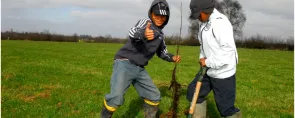
What began as a project within the National Forest has grown into a Geopark ready for independence alongside international recognition. We have walked this journey together and remain proud to host and champion its success as part of our shared landscape. As we continue to plant the forest of the future, we are proud to celebrate our Precambrian foundations and the internationally significant fossils contained within. UNESCO Global Geopark status would inspire people to explore Charnwood Forest’s ancient story alongside the wider National Forest, helping to protect and celebrate both for generations to come.
To find out more about the work of Charnwood Forest Geopark, visit their website.
If you’d like to help protect remarkable places like this, you can play your part by becoming a Forest Champion. Together we can ensure that the story of the Forest, old and new, continues to inspire long into the future.