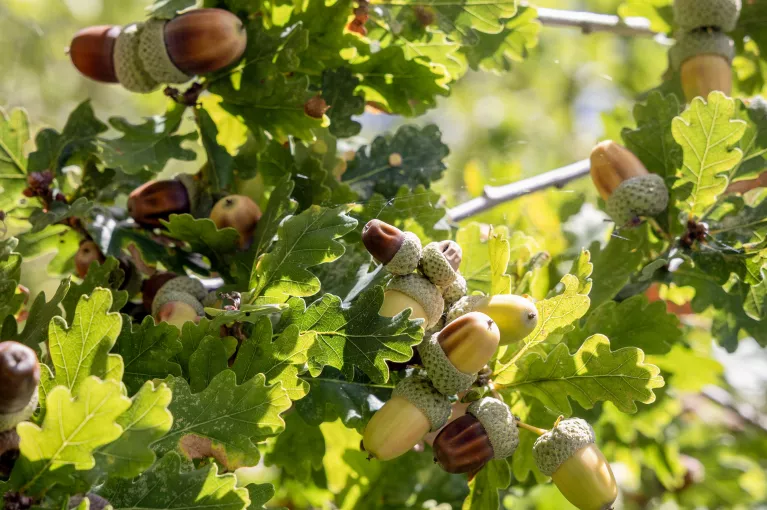
Across the UK, woodlands are showing signs of this extraordinary abundance. For birds, mammals, and other creatures, it means plentiful food supplies, while for trees, it ensures the next generation of oaks, beeches, and hazels can take root.
Stuart Dainton, Head of Land Management and Estate at the National Forest, said:
"A mast year is one of nature’s wonderful events. Trees synchronise to produce vast amounts of seeds, fruits, and nuts all at once. This not only feeds wildlife but also helps the forest renew itself. It’s a remarkable reminder of how woodland ecosystems sustain life."
Mast years don’t happen every year, they’re irregular, influenced by weather, and sometimes coordinated across wide areas, possibly through underground fungal networks. By producing more seeds than wildlife can eat, a strategy called predator satiation, trees increase the chances that enough seeds survive to grow into new trees.
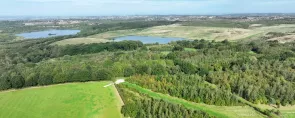
Stuart adds: "Here in the National Forest, with over nine million trees planted across 200 square miles, many woodlands are now mature enough to contribute to this cycle. A mast year showcases the resilience of our forests and why investing in trees is so important - for wildlife, people, and the climate."
This autumn, enjoy the sights, sounds, and smells of the forest at its most bountiful - and remember, every acorn you see may be helping to grow the forests of the future.
If you’re feeling inspired, and want to help to grow the Forest an help towards our next milestone, then find out how you can support us.